USA
USA
 Pakistan
 Singapore

7 Benefits of 24/7 Property Monitoring UK Landlords Should Know
An empty rental property is a liability the moment the last tenant leaves. Squatters, vandalism, theft of fixtures, even accidental fires — none of these wait for a landlord’s next scheduled visit. That’s the gap 24/7 property monitoring UK landlords increasingly rely on is built to close: constant, live oversight instead of occasional checks.
This isn’t just about cameras. It’s about someone actually watching, responding, and acting before small problems become expensive ones. Here are seven concrete benefits landlords get from round-the-clock monitoring, and what to look for when choosing a provider.
TL;DR
- 24/7 monitoring catches problems the moment they happen, not days later on a routine visit.
- Vacant and void-period properties are the highest-risk category, and the ones monitoring protects best.
- Live response can deter break-ins and vandalism before damage occurs, not just record it afterward.
- SIA-licensed monitoring meets recognised UK security standards, which matters for insurance and compliance.
- Faster incident response often means lower repair costs and fewer disrupted tenancies.
What Is 24/7 Property Monitoring?
Direct answer: 24/7 property monitoring UK services use CCTV, sensors, and live human operators to watch a property around the clock and respond immediately to anything unusual.
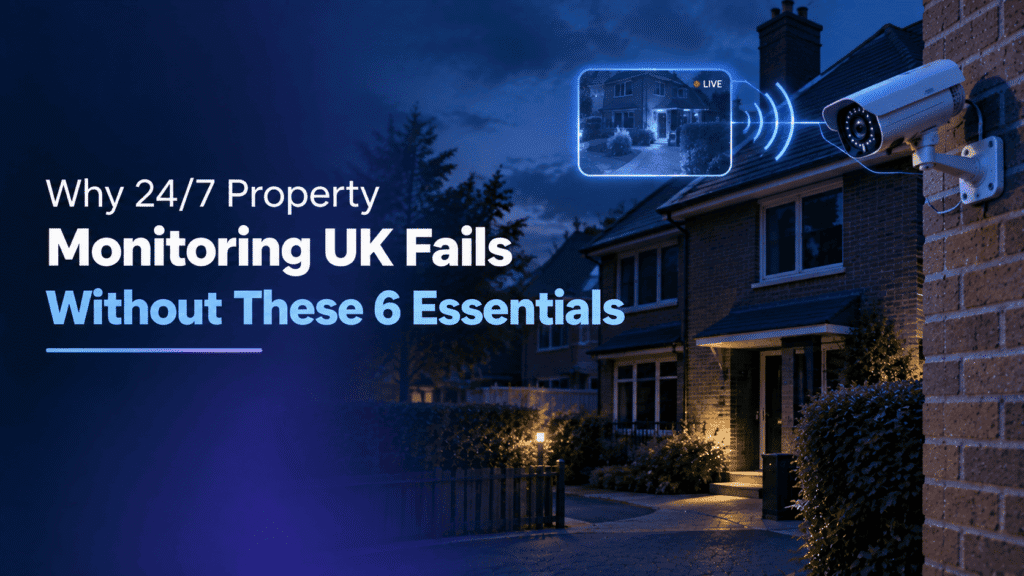
Unlike a standard camera system that only records footage for later review, remote property monitoring UK providers typically route live video feeds to an alarm receiving centre, where trained staff watch for movement, forced entry, or other alerts. When something happens, an operator can intervene directly — through two-way audio, an alarm, or a call to the police — rather than simply logging the event.
Why This Matters More Than People Think
Most property crime happens outside office hours: late at night, on weekends, or during long void periods when nobody is checking in. A system that only records footage means the damage is already done by the time anyone reviews it. Constant monitoring shifts the response from “after the fact” to “in the moment.”
7 Benefits of 24/7 Property Monitoring for UK Landlords
1. Protection for Vacant and Void-Period Properties
Direct answer: Vacant property monitoring UK services specifically target the highest-risk window in a rental cycle — the gap between tenants.
Empty properties attract squatters, metal theft, and vandalism because nobody is expected to be there. Residential surveillance with live monitoring means any unauthorised entry triggers an immediate response, not a discovery weeks later when the next tenant moves in.
2. Faster Response Than a Periodic Site Visit
Direct answer: Live monitoring cuts the time between an incident starting and someone responding from hours or days down to minutes.
A landlord or agent checking a property once a week can miss a break-in entirely until the damage is already extensive. Remote monitoring solutions close that gap by having someone watching in real time, every hour of every day.
3. A Genuine Deterrent, Not Just a Record
Direct answer: Visible cameras backed by live monitoring deter opportunistic crime far more effectively than a camera that only records.
According to the ICO’s guidance on domestic CCTV systems, clearly signposted, properly used CCTV plays a legitimate role in protecting property — and that deterrent effect is strongest when intruders know someone might actually respond, not just review footage the next day.
4. Lower Repair and Insurance Costs Over Time
Direct answer: Catching an incident early — a break-in, a burst pipe, an electrical fault caught on camera — usually means smaller repair bills than discovering it days later.
Insurers increasingly look favourably on properties with active 24/7 surveillance monitoring in place, since documented, real-time response reduces claim severity. Some providers also support this with CCTV monitoring pricing structured around the size and risk profile of the property, rather than a flat fee that doesn’t reflect actual coverage needs.
5. SIA-Licensed Standards for Compliance and Trust
Direct answer: SIA licensed CCTV monitoring UK providers are trained and assessed against recognised national standards for public space surveillance.
The Security Industry Authority’s Knowledge and Skills Specification sets out the competencies operators must demonstrate before they’re licensed to monitor CCTV professionally. Choosing a provider that meets this standard gives landlords a level of accountability that unlicensed, DIY camera setups simply can’t match.
6. Coverage That Scales From One Property to a Portfolio
Direct answer: Commercial property monitoring UK services are built to cover multiple sites from a single monitoring centre, which makes them practical for landlords managing more than one property.
Rather than relying on separate app notifications for each address, professional monitoring services can watch an entire portfolio simultaneously, flagging issues at any site the moment they occur.
7. Peace of Mind Without Constant Site Visits
Direct answer: Landlords get continuous oversight without needing to physically check on a property themselves.
This matters especially for landlords managing properties remotely or with multiple tenancies. Live security monitoring means someone else is always watching, so a missed visit or a busy week doesn’t leave a property unprotected.
How Does Remote CCTV Monitoring Actually Work?
Direct answer: Cameras feed live video to a monitoring centre, where operators watch for triggers like motion, forced entry, or breached perimeters, and respond according to a pre-agreed protocol.
That protocol might include sounding an on-site alarm, using two-way audio to warn an intruder they’ve been seen, or contacting the police directly. Response procedures for this kind of surveillance are generally shaped by guidance like ProtectUK’s CCTV operational requirements, which sets out how camera systems should be planned and risk-assessed to actually support a security response, not just capture footage.
Summary
24/7 property monitoring gives UK landlords something a routine site visit never can: someone watching in real time, every hour of the day. From protecting vacant properties during void periods to deterring break-ins before they escalate, the benefits compound — lower repair costs, stronger insurance standing, and far less time spent worrying about properties that aren’t currently occupied. For landlords managing multiple sites or properties they can’t check daily, SIA-licensed remote monitoring turns constant vigilance into something that’s actually achievable.
Frequently Asked Questions
Is remote CCTV monitoring worth it for UK landlords?
For most landlords, yes — especially for vacant properties or portfolios spread across multiple sites, where the cost of a break-in or extended void period usually outweighs the monitoring fee.
How much does property surveillance monitoring cost in the UK?
Pricing varies by property type, number of cameras, and coverage hours, but most providers scale pricing to the size and risk level of the property rather than charging a flat rate.
What is an alarm receiving centre?
An alarm receiving centre is a monitoring facility where trained operators watch live feeds and alarm signals from multiple properties, responding to incidents as they happen.
Do I need SIA-licensed monitoring for my rental property?
It’s not always legally required for private landlords, but SIA-licensed monitoring meets recognised UK training standards, which can matter for insurance purposes and overall reliability.
How is 24/7 monitoring different from a standard home CCTV system?
A standard system usually just records footage for later review. 24/7 monitoring adds live human oversight, so incidents are spotted and responded to as they happen, not discovered afterward.
Can 24/7 monitoring cover more than one property at once?
Yes. Many providers monitor entire portfolios from a single centre, which is one of the main reasons landlords with multiple properties choose this over individual, unmonitored camera systems.
Is CCTV monitoring legal for rental properties in the UK?
Generally yes, provided it complies with data protection guidance, such as clear signage and appropriate camera placement, as outlined in the ICO’s domestic CCTV guidance.