USA
USA
 Pakistan
 Singapore
7 CCTV Monitoring UK Residential Benefits Every Homeowner Should Know
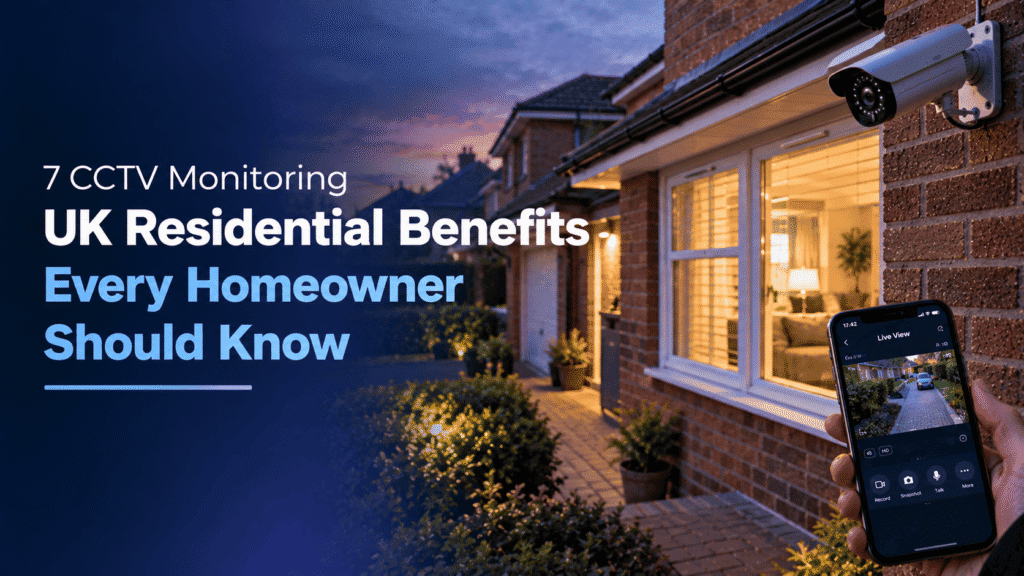
A camera on the wall doesn’t stop anything by itself. What actually protects a home is what happens after that camera sees something — whether footage just sits there until someone checks it, or whether a trained operator is watching live and can respond immediately. That distinction is the whole point of CCTV monitoring UK residential systems, and it’s why more homeowners are moving beyond basic recording setups.
This guide covers seven real benefits of residential CCTV monitoring, along with the legal and practical details every UK homeowner should understand before installing one.
TL;DR
- Live monitoring means real-time response to incidents, not just footage reviewed after the fact.
- Home CCTV is legal in the UK, but it must follow ICO guidance, especially around neighbouring properties.
- SIA-licensed monitoring meets recognised national standards for public space surveillance.
- Remote access lets homeowners check their property from anywhere, not just when they’re home.
- Monitoring costs vary by coverage level, but most systems scale to fit different budgets.
What Is Residential CCTV Monitoring?
Direct answer: Residential CCTV monitoring UK systems combine cameras with either a live monitoring service or remote access, so footage is actively watched or checked rather than just stored.
A basic camera system records continuously and only gets reviewed if something goes wrong. Live CCTV monitoring for residential UK properties adds a layer where trained operators — or the homeowner themselves via an app — watch feeds in real time and can act immediately when something looks wrong.
How Does CCTV Monitoring Work in Practice?
Cameras feed video either to a monitoring centre or directly to a homeowner’s phone. When motion or an alert is triggered, an operator (or the homeowner) reviews the footage and decides on a response — anything from a warning through two-way audio to contacting the police. Procedures for this are generally shaped by guidance like ProtectUK’s CCTV operational requirements, which sets out how camera systems should be planned to actually support a security response.
7 Benefits of CCTV Monitoring for UK Homes
1. Real-Time Response, Not Just a Recording
Direct answer: Live monitoring means someone sees an incident as it happens and can respond immediately, rather than discovering it hours or days later.
This is the core advantage over a standalone camera system. Live security monitoring turns a passive recording device into an active deterrent, because there’s a real chance of intervention while something is still happening.
2. A Legal, Well-Regulated Approach to Home Security
Direct answer: Is home CCTV monitoring legal UK-wide? Yes, provided it follows data protection principles set out by the ICO.
According to the ICO’s guidance on domestic CCTV systems, homeowners using CCTV need to be mindful of camera angles that capture neighbouring properties or public pavements, since this can bring additional data protection obligations. Staying within this guidance keeps a system both legal and neighbour-friendly.
3. Remote Access From Anywhere
Direct answer: Remote CCTV monitoring for homes UK lets homeowners check live feeds from their phone, whether they’re at work, on holiday, or just in another room.
This is especially useful for checking in on deliveries, pets, or family members without needing to be physically present. Remote video surveillance means the property is never truly unwatched, even when nobody’s home.
4. SIA-Licensed Standards for Trust and Accountability
Direct answer: SIA licensed CCTV monitoring UK providers are trained and assessed against a recognised national standard for public space surveillance.
The Security Industry Authority’s Knowledge and Skills Specification sets out exactly what operators need to demonstrate before they’re licensed. Choosing a licensed provider gives homeowners a level of accountability that self-monitored or unmonitored systems simply don’t offer.
5. 24/7 Coverage Without Constant Attention
Direct answer: 24/7 CCTV monitoring UK services mean a property is watched continuously, without the homeowner needing to check footage themselves.
24/7 surveillance monitoring is particularly valuable overnight, when most break-ins occur and homeowners are least likely to be checking a live feed personally.
6. Scalable Costs to Match Different Budgets
Direct answer: Residential CCTV monitoring cost UK-wide varies significantly based on the number of cameras, coverage hours, and whether monitoring is fully live or on-demand.
Providers typically offer tiered options, so CCTV monitoring pricing can be matched to what a property actually needs rather than a one-size-fits-all package. A smaller home with a single entry point doesn’t need the same setup as a larger property with multiple access points.
7. Faster Identification of Genuine Threats
Direct answer: Trained monitoring reduces false alarms by distinguishing between genuine security events and harmless activity, like a cat or a delivery driver.
This matters because unmonitored systems tend to generate alerts for everything, which homeowners often start ignoring over time. What is real-time CCTV monitoring actually solving is that fatigue — a trained eye filters out the noise so only genuine concerns get flagged.
Staying Compliant: CCTV Monitoring GDPR Rules
Direct answer: CCTV monitoring GDPR rules for UK homeowners mainly involve minimising footage of shared or public spaces and being able to explain why cameras are positioned where they are.
Councils have started publishing their own guidance on this too — Havering Council’s advice on video doorbells and CCTV for tenant homes is a good example of how local authorities expect residents to balance security with their neighbours’ privacy. Following these principles from the start avoids disputes and keeps a system fully compliant.
Summary
CCTV monitoring UK residential systems offer far more than a basic recording camera ever could — real-time response, remote access, and SIA-licensed accountability all change what “having CCTV” actually means for a home. The legal side isn’t complicated either, provided cameras are positioned thoughtfully and homeowners follow ICO guidance. For most UK homeowners, the real decision isn’t whether to have CCTV, but whether it’s simply recording or actually being watched.
Frequently Asked Questions
Is CCTV monitoring for residential homes legal in the UK?
Yes, provided it follows ICO guidance, particularly around not unnecessarily capturing footage of neighbouring properties or public areas.
How much does residential CCTV monitoring cost in the UK?
Costs depend on the number of cameras and whether monitoring is live or on-demand, but most providers offer tiered pricing to suit different property sizes and budgets.
What’s the difference between recording and live monitoring?
Recording only captures footage for later review. Live monitoring means an operator or the homeowner watches feeds in real time and can respond to incidents as they happen.
Do I need SIA-licensed monitoring for my home?
It’s not always a legal requirement for private residential use, but SIA-licensed monitoring meets recognised national training standards, which adds a layer of reliability and accountability.
Can I access CCTV footage remotely from my phone?
Yes, most modern residential CCTV systems support remote access through an app, letting homeowners check live feeds and recorded footage from anywhere.
What are the GDPR rules for home CCTV in the UK?
Homeowners should avoid unnecessarily capturing footage of neighbours’ property or shared public spaces, and should be prepared to explain their camera setup if asked.
How does CCTV monitoring actually reduce false alarms?
Trained operators or smart systems can distinguish between genuine security events and harmless triggers like pets or deliveries, cutting down on unnecessary alerts.