USA
USA
 Pakistan
 Singapore
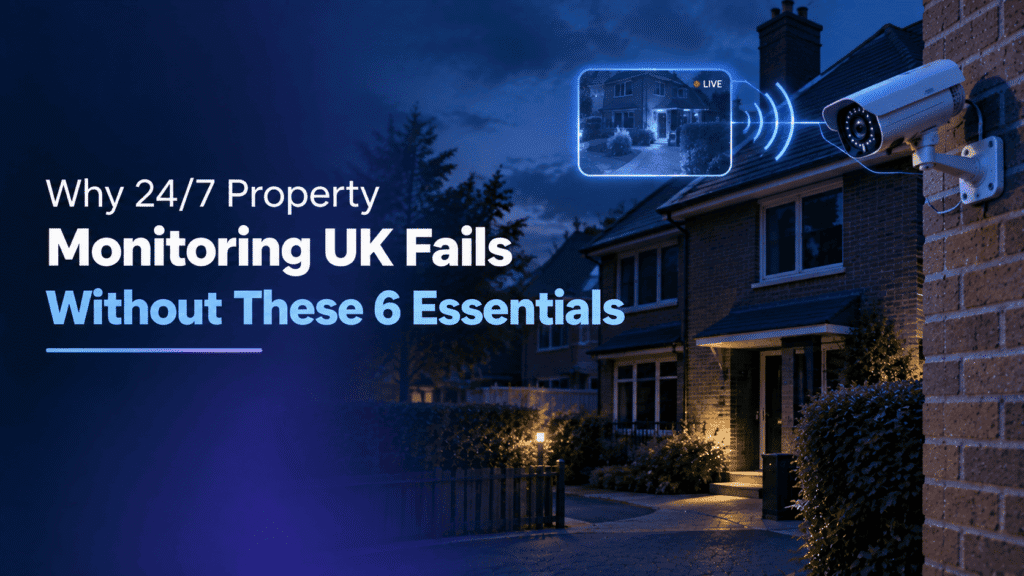
Why 24/7 Property Monitoring UK Fails Without These 6 Essentials
Paying for round-the-clock monitoring feels like the end of the security problem. Then a break-in happens on a quiet Sunday night, the alert goes unanswered, or a dead router silences every camera. 24/7 property monitoring UK owners rely on fails in predictable ways, and almost none of them come down to the cameras themselves.
This guide explains where monitoring setups break down and the six essentials that keep a service working when it actually counts.
TL;DR
- Monitoring fails at the system level (connectivity, verification, escalation), not usually at the camera.
- Live human verification cuts false alarms and speeds up genuine responses.
- Vacant and commercial properties need coverage designed around their specific risks.
- Backup power and connectivity keep a system watching when it matters most.
- Licensed operators and GDPR-compliant setups protect both the property and the owner.
What Does 24/7 Property Monitoring Actually Include?
Direct answer: 24/7 property monitoring UK services combine cameras or sensors with a staffed monitoring centre that watches for alerts around the clock and follows an agreed response plan.
Remote property monitoring UK providers typically route signals to an alarm receiving centre, where trained operators review video, verify the event, and decide whether to sound a warning, call a keyholder, or contact the police. The equipment on site is only the first link in that chain.
How Does Remote CCTV Monitoring Work?
A camera or sensor detects movement and sends a clip or live feed to the monitoring centre. An operator checks what triggered it, then follows the property’s escalation plan. If any link fails, such as a lost connection or an unclear instruction, the whole chain fails with it.
The 6 Essentials Most Monitoring Setups Miss
1. Live Human Verification, Not Just Automated Alerts
Direct answer: Automated motion alerts alone create noise; a trained operator confirming what’s on screen is what turns an alert into a response.
Without verification, owners either drown in false alarms or start ignoring notifications. Live video monitoring means a person decides what’s genuine, which is also what makes an escalation credible when authorities are contacted.
2. Resilient Connectivity and Power
Direct answer: A monitoring system is only as reliable as its internet connection and power supply, so both need backups.
Vacant property monitoring UK owners often depend on a single broadband line or mains supply, both of which can fail quietly. A 4G backup and battery-backed equipment keep signals flowing during outages, and remote monitoring capabilities should include alerts when a device itself goes offline.
3. Coverage Designed Around the Property Type
Direct answer: Vacant homes, commercial premises and building sites each face different threats, so one generic camera layout rarely fits.
An empty house needs entry-point and interior detection, while commercial property monitoring UK businesses use usually adds loading areas, stockrooms and after-hours access logs. Sites under works need different thinking again, which is where construction surveillance approaches differ from standard residential setups.
4. Cameras That Work After Dark
Direct answer: Most incidents happen at night, so low-light performance is an essential, not an upgrade.
Night vision monitoring keeps footage usable without floodlights, and pairing it with threat detection helps operators focus on genuine movement in restricted areas rather than every passing shadow.
5. A Clear Escalation Plan
Direct answer: Every monitored property needs a written plan covering who is contacted, in what order, and what the operator is allowed to do.
That plan usually names keyholders, sets out when to call the police, and defines whether the operator can use two-way audio to challenge someone on site. UK police forces generally prioritise alarms that have been verified, so a monitoring provider that can confirm an event visually is far better placed to trigger a useful response. Remote guarding services build this kind of structured response directly into the service.
6. Licensed Operators and Legal Compliance
Direct answer: SIA licensed CCTV monitoring UK providers meet recognised standards, and any camera system must also respect data protection rules.
Operator standards have been in the public eye for some time, including a Manchester Arena Inquiry recommendation on CCTV licensing that has been the subject of consultation. On the data side, the ICO’s domestic CCTV guidance covers camera angles, signage and footage handling, which matter for landlords and homeowners alike.
How Much Does 24/7 Property Monitoring Cost?
Direct answer: Property surveillance monitoring cost UK owners pay depends on the number of cameras, coverage hours, response services included and contract length.
A single vacant flat with a few cameras costs far less to cover than a multi-building commercial site. It’s worth comparing what each quote actually includes, such as live verification, keyholder calls and outage alerts, rather than choosing on the headline monthly figure. Providers offering camera monitoring services usually price by camera count and coverage window, so a tailored quote beats a flat package.
Is Remote CCTV Monitoring Worth It in the UK?
Direct answer: For most owners of vacant, remote or high-value properties, monitoring is worth it because it changes the outcome of an incident, not just the evidence left behind.
A break-in caught in progress can be stopped or shortened, while one discovered on Monday morning cannot. Property owners weighing this up should compare monitoring costs against realistic loss figures: repairs, void periods, insurance excess and time spent dealing with the aftermath. Systems that combine live verification with real time security monitoring tend to earn back their cost fastest on properties that would otherwise sit unattended for long stretches.
Summary
24/7 property monitoring works when the whole chain works: reliable connectivity, live human verification, coverage matched to the property, night-capable cameras, a clear escalation plan and licensed, compliant operators. Skip any one of these and the service can look active while doing very little. Before signing a contract, ask providers how each essential is handled, and choose the one that can answer clearly.
Frequently Asked Questions
Is 24/7 remote CCTV monitoring worth it for a vacant property?
Usually yes. Empty properties are exposed for long stretches with nobody checking, so live monitoring can catch entry attempts, water leaks or fires that a periodic visit would miss.
What is an alarm receiving centre?
An alarm receiving centre is a staffed facility that receives signals from alarms and cameras, verifies them, and escalates to keyholders or emergency services according to the property’s plan.
How much does property surveillance monitoring cost in the UK?
Prices vary with camera numbers, coverage hours and the response services included, so compare what each quote covers rather than the monthly fee alone.
Do I need SIA licensed CCTV monitoring?
It isn’t always a legal requirement for private property, but licensed operators meet recognised training standards, which adds accountability and can help with insurance conversations.
What happens if my internet goes down?
Systems without a backup lose their connection to the monitoring centre. A 4G or secondary connection, plus offline alerts, keeps coverage in place during outages.
Can monitoring cover commercial premises as well as homes?
Yes. Commercial property monitoring UK providers commonly cover shops, warehouses and offices, often adding after-hours access alerts and multi-site oversight.
Is home or property CCTV monitoring legal in the UK?
Generally yes, provided it follows ICO guidance on signage, camera angles and how footage is stored and used, particularly where cameras might capture neighbouring land.