USA
USA
 Pakistan
 Singapore
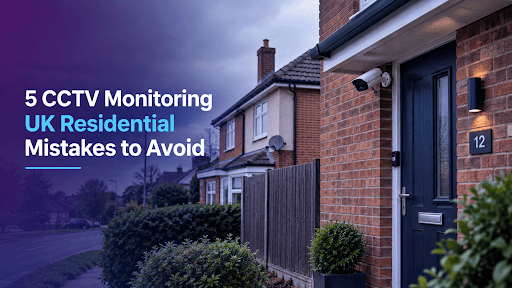
5 CCTV Monitoring UK Residential Mistakes That Cost Homeowners Money
Installing a home camera in the UK feels like a simple decision — buy it, mount it, and let it run. In practice, CCTV monitoring UK residential setups sit inside a legal framework that most homeowners never read, and the mistakes that follow can lead to formal complaints, ICO involvement, or disputes with neighbours that drag on for months.
This guide covers the five most common mistakes, why each one causes problems, and how to fix them before they become expensive.
TL;DR
- Filming beyond your own property boundary is the single biggest source of complaints and legal exposure.
- Domestic CCTV is generally exempt from full UK GDPR, but that exemption disappears the moment footage captures shared or public spaces.
- Missing or vague signage undermines your legal position even when the camera itself is placed correctly.
- Keeping footage indefinitely creates unnecessary risk — most guidance points toward short, defined retention periods.
- Landlords and shared-building setups face stricter rules than a single homeowner filming their own front door.
Why CCTV Monitoring UK Residential Rules Matter
Direct answer: These rules matter because home cameras that capture neighbouring properties, shared spaces, or public pavements can trigger UK GDPR obligations even though purely domestic use is normally exempt.
The Information Commissioner’s Office is explicit that the moment a camera’s view extends past your own boundary — into a neighbour’s garden, a shared driveway, or a public footpath — the “domestic purposes” exemption no longer applies in the same way. That single distinction is behind most of the disputes homeowners run into.
Mistake 1: Filming Beyond Your Property Boundary
The most frequent issue with residential surveillance privacy rights isn’t the camera itself — it’s the angle. A doorbell camera or a wall-mounted unit angled slightly too wide can easily capture a neighbour’s front door, their car, or people walking past on the street.
Fixing this is usually a five-minute adjustment. Reposition the camera or use privacy masking (a feature built into most modern systems) to blank out areas outside your property. If you’re setting up remote video surveillance for the first time, checking the field of view before finalising the mount is far easier than adjusting it after a complaint.
Mistake 2: Assuming Domestic CCTV Is Never Covered by GDPR
Direct answer: Domestic CCTV GDPR rules generally don’t apply when a camera only records your own property for personal security, but that exemption ends once footage regularly captures other people’s outdoor spaces.
Homeowners often treat “it’s my house, my camera” as the end of the conversation. According to GOV.UK’s guidance on domestic CCTV, once a system captures images beyond the boundary of the property on a regular basis, the person operating it may need to comply with data protection law, including being able to explain why footage is collected and how long it’s kept. This is especially relevant for anyone running residential surveillance across a larger property with multiple entry points.
Mistake 3: Skipping or Ignoring CCTV Signage Requirements
Signage feels like a formality, but CCTV signage requirements UK guidance treats it as a meaningful part of transparency, particularly once a system captures anything beyond your own garden. A visible, legible sign lets neighbours and visitors know they may be recorded and reduces the likelihood of a complaint escalating.
- Place signs where they’re clearly visible before someone enters the camera’s view.
- Keep wording simple: what’s recorded and who to contact with concerns.
- Update signage if you add cameras or change their coverage area.
This is a small step, but it consistently comes up in guidance from local authorities, including council-issued advice for domestic camera systems aimed at tenants and homeowners alike.
Mistake 4: Keeping Footage Indefinitely
CCTV footage retention rules aren’t fixed by law at a single number of days for domestic users, but the general principle — don’t keep data longer than necessary — still applies once a system extends past pure personal use. Storing months or years of footage “just in case” increases risk without adding meaningful benefit.
A simple retention policy solves this:
- Decide how long footage genuinely needs to be kept (commonly 30 days for most home setups).
- Set automatic deletion or overwriting once that period passes.
- Only save specific clips manually when there’s a real reason, like an incident report.
If you’re comparing storage options, cloud vs local storage for CCTV footage affects how easily automatic retention limits can be applied.
Mistake 5: Treating Landlord and Shared-Building CCTV Like a Personal Camera
Is home CCTV legal in the UK for landlords the same way it is for a single homeowner? Not quite. Direct answer: Landlords and shared-building operators face stricter obligations than individual homeowners because cameras in communal areas typically fall outside the domestic exemption entirely.
A camera covering a shared hallway, communal garden, or building entrance is generally treated as a data controller responsibility, not a personal one. That means clear notices, defined retention, and a documented reason for recording become necessary rather than optional. This applies directly to CCTV monitoring for landlords UK situations, apartment blocks, and any remote CCTV monitoring for gated communities where multiple households share sightlines.
Smart Doorbell Cameras: The Overlooked Grey Area
Smart doorbell camera regulations UK guidance often gets skipped because doorbells feel like a lighter version of full CCTV. In practice, the same boundary and signage principles apply. A doorbell camera that captures a shared porch, a neighbour’s parking space, or a public pavement is subject to the same considerations as a wall-mounted system.
For live security monitoring setups that include doorbell cameras alongside traditional units, it’s worth auditing every device’s field of view together rather than treating the doorbell as separate from the rest of the system.
How to Set Up Compliant Residential CCTV Monitoring
Getting CCTV monitoring UK residential setups right from the start avoids most of the issues above. A practical approach looks like this:
- Map out exactly what each camera can see before mounting it permanently
- Use privacy masking for any unavoidable overlap with shared or public space
- Add clear signage wherever coverage extends beyond your own property
- Set a defined, reasonable retention period and automate deletion
- Document your reason for recording, especially for landlord or shared-building setups
Homeowners running a full villas CCTV monitoring setup, or larger properties with multiple external cameras, benefit most from doing this audit once across every device rather than fixing issues camera by camera.
Summary
CCTV monitoring UK residential setups are legal and effective, but the details matter more than most homeowners expect. Filming beyond your boundary, misunderstanding GDPR exemptions, skipping signage, keeping footage indefinitely, and treating shared-building systems like personal cameras are the five mistakes that consistently turn a simple security setup into a legal or neighbourly dispute.
Fixing each one is straightforward: check your camera’s field of view, add clear signage where needed, set a defined retention period, and treat landlord or shared-space systems with the extra care they require. Getting these details right from the start keeps residential CCTV doing exactly what it’s meant to do — protecting your home without creating new problems.
Frequently Asked Questions
Is home CCTV legal in the UK?
Yes. Homeowners can legally install CCTV to protect their own property. The legal considerations increase once a camera captures neighbouring properties, shared spaces, or public areas beyond your own boundary.
Do I need a sign if my CCTV only covers my own garden?
Formal signage requirements become more important once footage extends beyond your property. Even for garden-only setups, a small sign is good practice and helps avoid misunderstandings with visitors or delivery drivers.
How long can I legally keep CCTV footage at home?
There’s no single fixed number for purely domestic use, but the general principle is to keep footage only as long as necessary. Many homeowners use a 30-day rolling deletion policy unless a specific clip needs to be saved.
Can my neighbour ask to see my CCTV footage?
If a camera has captured them and their personal data is affected, they may be able to make a request. Whether you’re obligated to comply depends on the situation and whether the domestic exemption applies to your setup.
Are smart doorbell cameras treated differently from regular CCTV?
Not significantly. Smart doorbell camera regulations UK guidance applies the same boundary, signage, and data protection principles as any other residential camera, particularly when the doorbell captures shared or public areas.
Do landlords need to register their CCTV systems?
Landlords operating cameras in shared or communal areas typically take on data controller responsibilities, which can include documentation, signage, and defined retention — obligations that go beyond what applies to a single homeowner’s private camera.
What’s the easiest way to avoid CCTV complaints from neighbours?
Check your camera’s actual field of view, not just where it’s pointed. Most complaints come from unintentional overlap with a neighbour’s property, which privacy masking or a small repositioning usually resolves.